Examining Payout Endurance Elements in Resort Operators During Leisure Trend Transitions
Amir Richter · Sep 18, 2026

Examining Payout Endurance Elements in Resort Operators During Leisure Trend Transitions
Operators across integrated resort properties continue to navigate dividend structures while consumer preferences move toward experiential entertainment options, digital platforms, and wellness-focused activities, and data from multiple markets shows how these groups maintain payout consistency through targeted adaptations. Research from industry bodies indicates that companies balancing gaming revenue with expanded non-gaming offerings sustain distribution levels more effectively than those relying solely on traditional floor operations, especially as younger demographics allocate leisure spending differently than previous generations.
Market Data on Preference Shifts in Mid-2026
Figures released in September 2026 by regional gaming commissions highlight a measurable increase in visitor interest toward hybrid entertainment venues that combine gaming with live events, dining expansions, and outdoor recreation zones, while pure slot and table play segments experience slower foot traffic in several jurisdictions. Observers note that this pattern appears across North American properties and extends into Asian markets where integrated resorts have adjusted amenity mixes to retain repeat visitors. Those who track spending patterns report that experiential categories now account for larger shares of total visitor outlays, prompting operators to recalibrate capital allocation toward facilities that support longer stays and higher ancillary revenue streams.
Analysts examining quarterly reports find that groups with diversified portfolios demonstrate steadier cash flows available for shareholder returns, since non-gaming revenue streams often exhibit lower volatility during periods when gaming volumes fluctuate with broader economic signals or seasonal tourism changes. Evidence from property-level disclosures reveals that operators incorporating wellness centers, entertainment arenas, and branded dining concepts generate supplementary income that offsets variability in core gaming margins, thereby supporting ongoing dividend commitments without requiring abrupt policy adjustments.
Structural Elements Supporting Distribution Stability
Companies maintain payout resilience through several documented approaches that include prudent debt management paired with selective reinvestment in high-margin amenities, and industry reports detail how such strategies preserve free cash flow even when consumer leisure choices evolve rapidly. One approach involves layering loyalty mechanisms that encourage cross-category spending, which in turn stabilizes overall revenue composition and reduces dependence on any single leisure segment. Another centers on geographic diversification that spreads exposure across markets with differing regulatory environments and consumer profiles, allowing operators to offset localized slowdowns with stronger performance elsewhere.
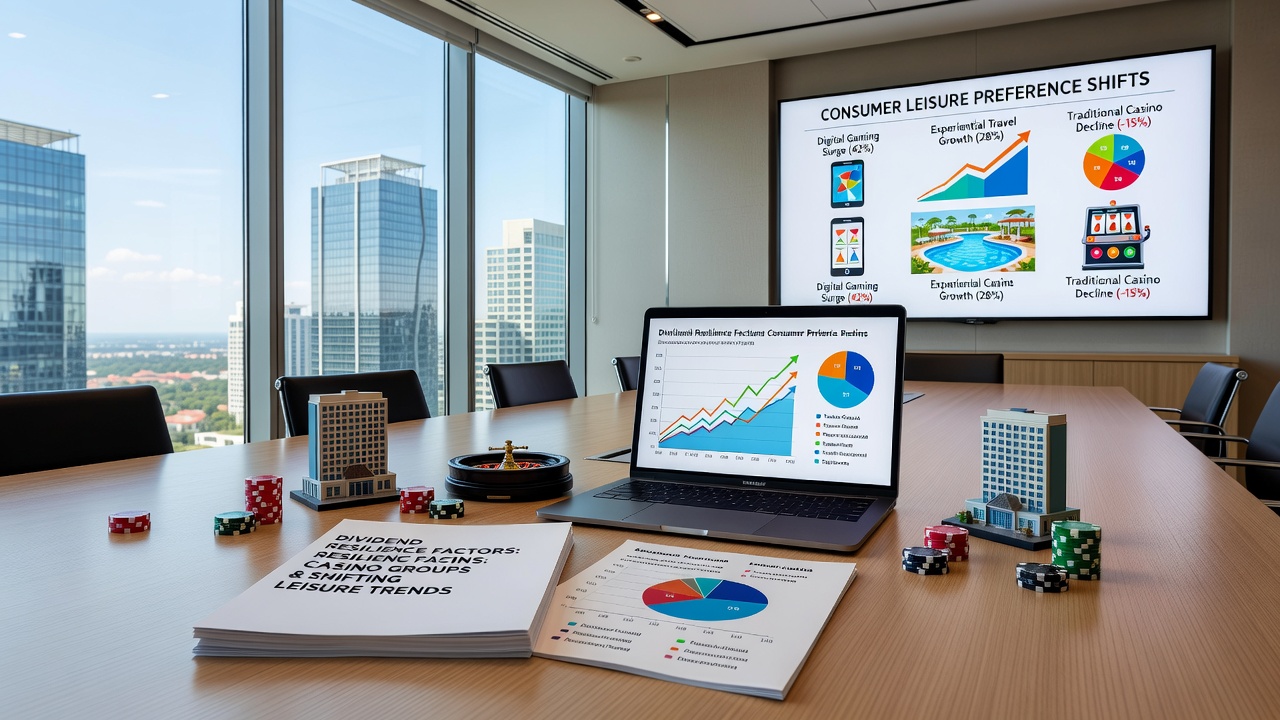
Financial disclosures further show that operators prioritizing balance sheet flexibility through measured capital expenditures retain greater capacity to uphold dividend schedules during transition periods, whereas aggressive expansion without corresponding revenue diversification has occasionally pressured distribution timelines. Data compiled by academic research centers such as the UNLV Center for Gaming Research confirms that properties achieving revenue balance across gaming, hospitality, and entertainment categories display narrower fluctuations in distributable earnings over multi-year horizons.
Regional Examples and Policy Responses
In markets like those overseen by the Gambling Regulatory Authority of Singapore, integrated resort operators have documented success maintaining consistent shareholder returns by expanding meeting and convention facilities alongside core gaming operations, which helps capture corporate and leisure segments that exhibit different spending cycles. Similar patterns emerge in Australian properties where additional family-oriented attractions and retail expansions have helped sustain cash generation levels that support regular distributions despite shifts in traditional gaming participation rates. Observers tracking September 2026 earnings releases note that groups applying these multi-stream models report lower sensitivity to single-category demand changes, resulting in fewer instances of dividend recalibration.
Those reviewing capital return histories also identify that operators employing dynamic pricing across amenities and implementing targeted promotional calendars tied to non-gaming events achieve steadier occupancy and spend metrics, which collectively underpin the earnings base required for reliable payouts. Such tactics appear particularly effective when consumer preferences favor shorter, high-value visits over extended gaming sessions, allowing properties to maximize per-visitor revenue without expanding physical footprints.
Conclusion
Resort operators facing evolving leisure preferences demonstrate payout endurance through revenue diversification, geographic spread, and disciplined capital deployment, and available figures from 2026 underscore how these elements combine to support distribution continuity across varied market conditions. Continued monitoring of consumer behavior data alongside property-level financial metrics will likely remain central to understanding which groups sustain dividend frameworks amid ongoing preference transitions.