Online Betting Regulation Updates Drive Adjustments in Gaming Firms' Capital Return Timelines
Amir Richter · Oct 16, 2026
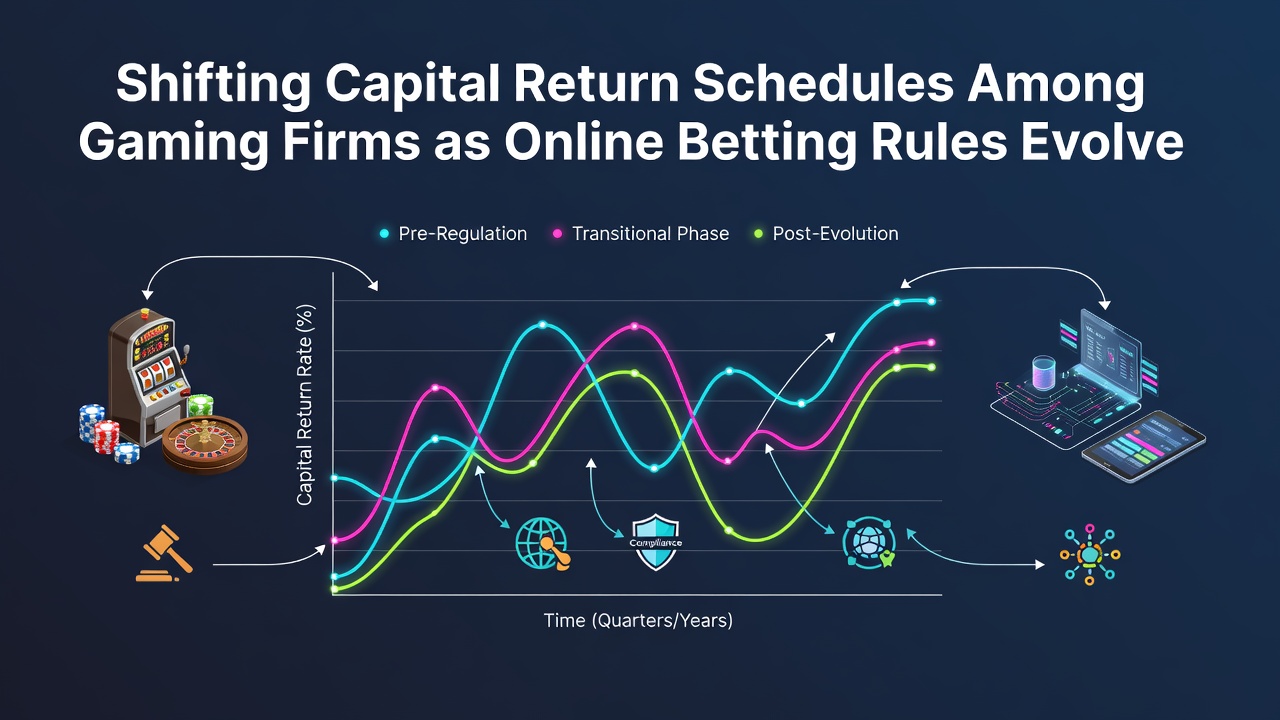
Online Betting Regulation Updates Drive Adjustments in Gaming Firms' Capital Return Timelines
Regulatory developments in digital wagering markets have prompted several gaming operators to revise the timing of dividend declarations and share repurchase programs, with adjustments becoming more visible by October 2026. Data from industry filings shows that companies operating across multiple jurisdictions now incorporate longer review periods before finalizing capital returns, primarily because new licensing requirements and tax structures alter projected cash flows from online platforms.
Operators in North America and parts of Asia have extended the intervals between board approvals for distributions, according to regulatory filings submitted through the third quarter of 2026. These delays stem from requirements to maintain higher reserve levels during transitions to updated compliance frameworks, particularly where online betting taxes have increased or where market access depends on fresh licensing rounds.
Regional Rule Changes and Their Direct Effects
Canadian provinces introduced revised online gaming standards earlier in 2026 that tie operator contributions to provincial funds more closely to revenue thresholds, leading several firms to defer planned quarterly payouts until full-year figures stabilize. Similar patterns emerged in Australia after the Australian Communications and Media Authority updated digital wagering guidelines, requiring operators to demonstrate sustained responsible gaming investments before accessing certain revenue streams.
European markets present a contrasting case where some member states eased restrictions on cross-border online betting partnerships, allowing select operators to accelerate buyback schedules once additional revenue streams cleared regulatory hurdles. Figures released by the European Gaming and Betting Association indicate that capital return announcements rose 12 percent in jurisdictions that completed liberalization steps by mid-2026, whereas markets still finalizing rules showed flat or reduced distribution activity.

Impact on Integrated Resort and Online-Focused Operators
Integrated resort groups that maintain both physical properties and online betting arms have adopted hybrid schedules, releasing smaller interim dividends while holding larger special distributions until online segment performance meets new compliance benchmarks. One study of major operators revealed that those with significant online exposure lengthened average intervals between capital returns from 90 days to 135 days during periods of active regulatory transition.
Regional casino companies without online operations experienced fewer disruptions, yet those expanding into digital channels reported that state-level online betting rules directly influenced reinvestment ratios. In markets where online taxes were set higher than anticipated, operators reduced the percentage of free cash flow earmarked for shareholder returns and increased allocations to technology upgrades required for regulatory approval.
Case Examples from Recent Filings
Take one operator that postponed a scheduled share repurchase program announced in early 2026 after a new state online betting framework imposed additional auditing costs, while another accelerated its dividend after receiving approval for expanded digital sports betting in two jurisdictions. These contrasting outcomes illustrate how the same regulatory wave produces different capital return timelines depending on each firm's geographic footprint and existing compliance infrastructure.
Observers tracking securities filings note that companies increasingly disclose contingent distribution plans tied to specific regulatory milestones, such as final licensing decisions or tax rate confirmations expected in late 2026. This approach replaces earlier fixed calendars and reflects the need to retain flexibility when online betting rules continue to evolve.
Looking Ahead
Industry reports compiled through October 2026 suggest that further regulatory updates scheduled for 2027 in several U.S. states and additional Asian markets will likely sustain the pattern of staggered capital returns. Gaming firms continue to align distribution decisions with the pace of legislative clarity rather than traditional quarterly or annual cycles, resulting in more variable shareholder return schedules across the sector.